X
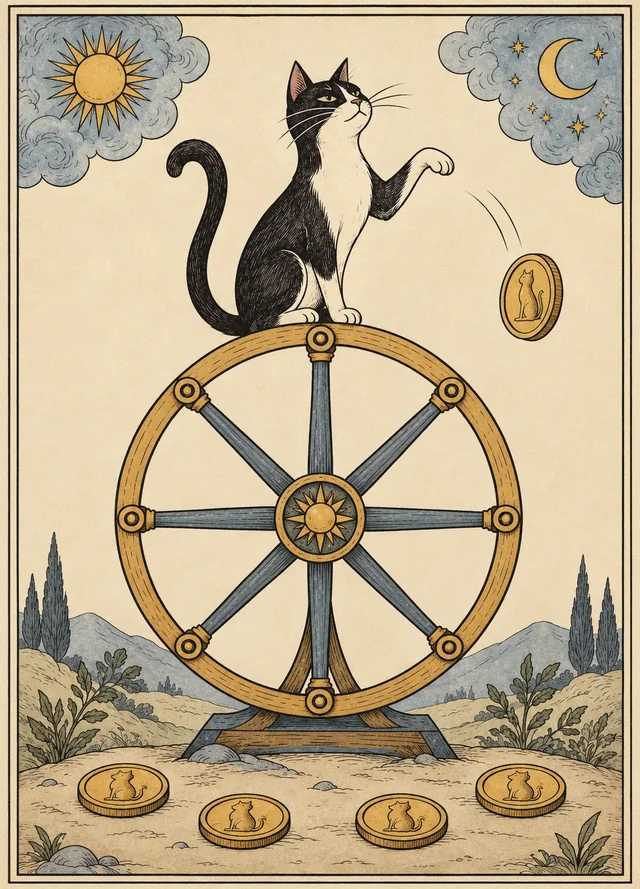
Gambler's fallacy
Fortune owes you a favor. Fortune disputes the invoice.
A losing streak can feel like a promise. The next independent toss has made no such commitment.
About this bias Catastrophic
A cat Tarot for the human mind
78 engraved cats, familiar Tarot, and sharp observations about how our minds work.
For friends who enjoy a reading, a laugh, and a question worth sharing.
The person holding the deck is included in the joke.
Physical deck and booklet in development. Try the illustrated web edition now.
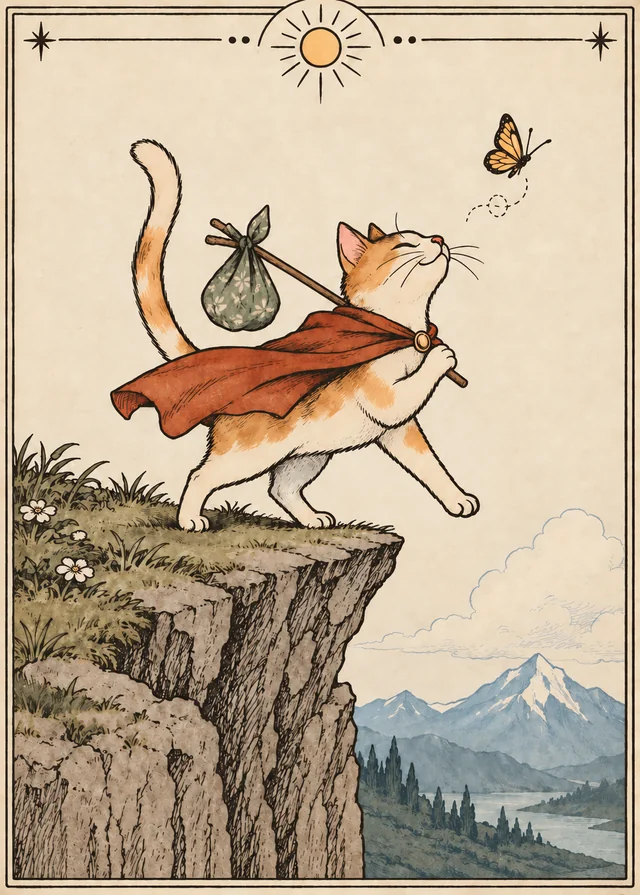
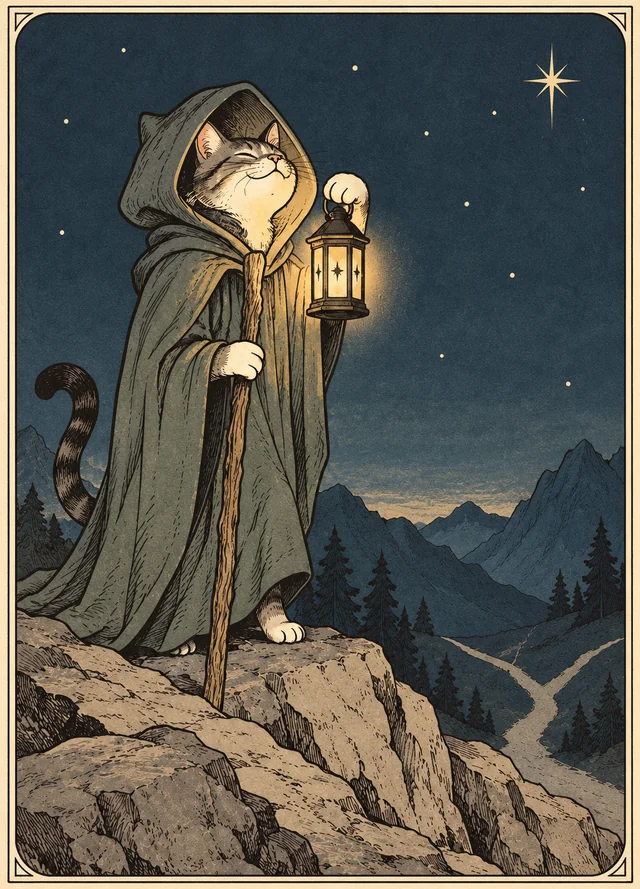
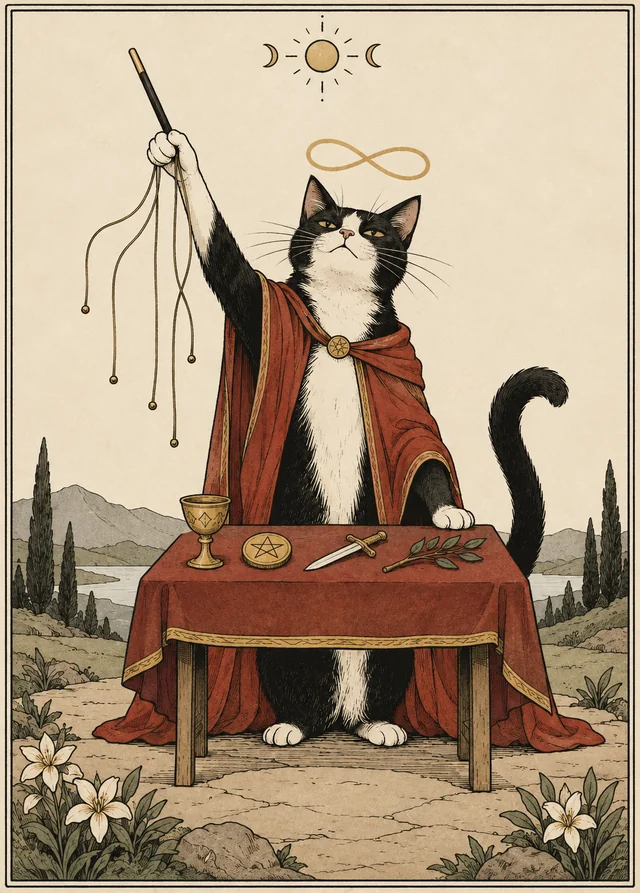
78 cards · Countless ways to be very sure
The card is random. The connection is ours.
A gift between friends
Think of a friend who loves Tarot. You may agree about the cards, or disagree completely. There is still a table to share, a story to enjoy, and a cat with an opinion about both of you.
Catastrophic Thinking keeps the familiar 78-card deck and gives its situations a very human twist. Hope, affection, rest, and ambition have a place here, alongside the shortcuts that can mislead us.
Enjoy the reading. Recognize something of yourself if it fits. The skeptical friend gets a turn too.
Fortune, hope, and the judge
Gambler's fallacy
Fortune owes you a favor. Fortune disputes the invoice.
A losing streak can feel like a promise. The next independent toss has made no such commitment.
About this bias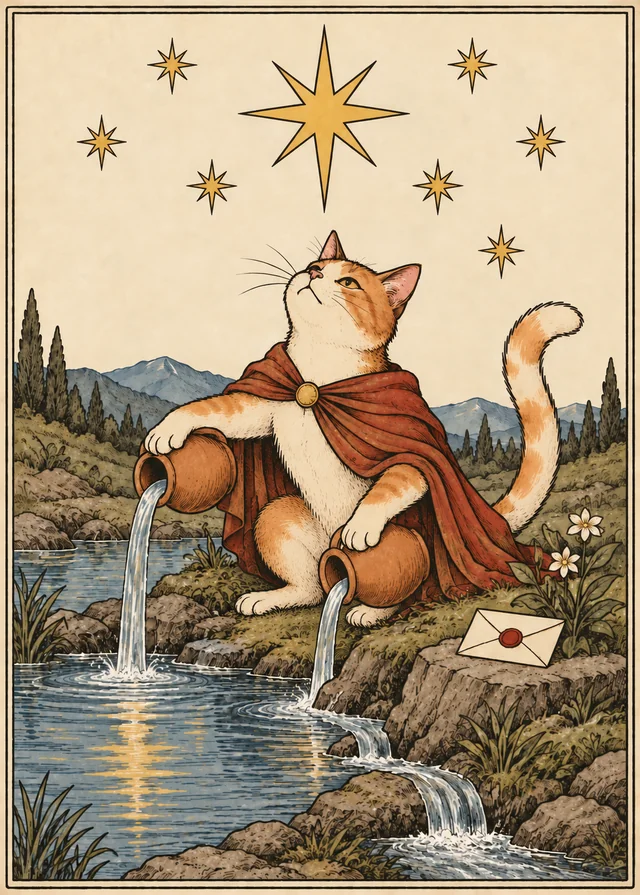
Impact bias
Hope has returned. It has ambitious plans for one acceptance letter.
Hope is welcome here. One good event can matter without having to change everything.
About this bias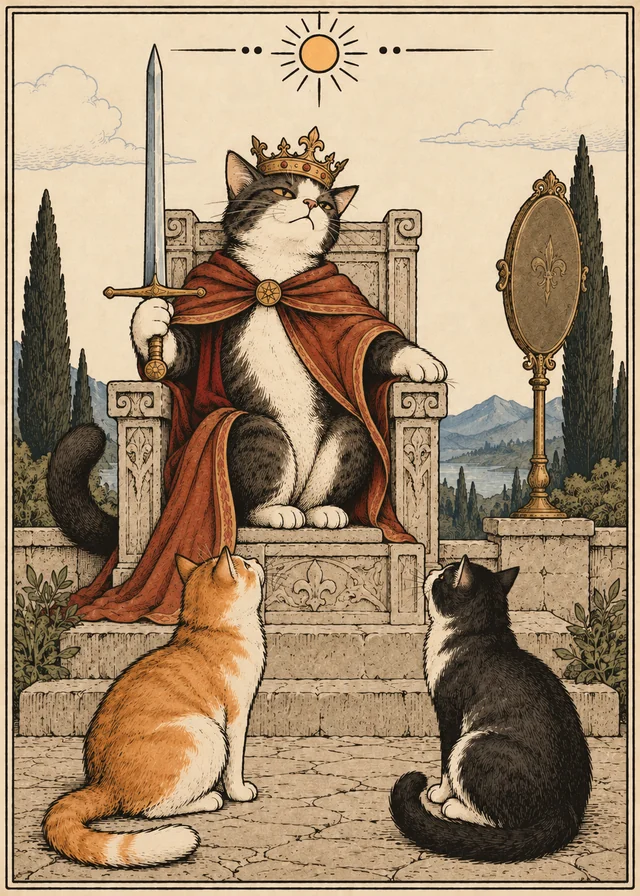
Bias blind spot
Everyone here is biased. Fortunately, you are here to explain it.
The skeptical host gets a card too. Seeing other people's biases gives us no exemption.
About this biasThink of an ordinary decision, a new beginning, or something you care about. Read the card as a possible story, then try its question if you want to.
You can say "this does not fit," draw again, or keep the connection to yourself.
Up to three cards a day, on the house.
Confirmation bias
You seek the truth. It is a remarkable coincidence that it agrees with you.
Your lantern lights the way, and the evidence along the path looks reassuringly familiar. There may be other paths. Before declaring the search complete, visit the one where your favorite conclusion receives a less enthusiastic welcome.
What evidence would make you change your mind?
Confirmation bias is looking for, noticing and remembering evidence that supports what you already believe. The habit belongs to believers and skeptics alike, including whoever is reading the cards. A disagreeable claim still needs its own evidence; disagreement alone does not make it true. The fair test is the one you would apply if you hoped for the opposite answer.
The Hermit's raised lantern lights a small part of a much larger landscape. That makes a useful metaphor for a search guided by an existing belief. Where we point the light helps determine what we find. Solitude and reflection remain strengths; the bias appears when we avoid a path that could challenge our answer.
Nickerson, 1998 · Confirmation bias: A ubiquitous phenomenon in many guises ↗Translation is incomplete or needs review against the English source.
The full cast
All 22 Major Arcana and all four suits.
Repeated biases, different situations.
Our minds have recurring characters.
The large stories.
The Fool takes the first step. The Tower questions the foundations.
The brilliant plan.
Ambition, action, and the things we forgot to put in the schedule.
The heart's version.
Affection, belonging, and a memory with a generous editing budget.
The excellent argument.
Evidence, conflict, and the conclusions that arrived before either.
The practical matter.
Money, work, and how yesterday's spending gets a vote on tomorrow.
These are our editorial themes. A Tarot symbol opens the conversation; the research describes the thinking habit.
Bring it to the table
You can love Tarot, doubt it, or simply like cats. The joke includes the person holding the deck.
Use one card for a question, or give a spread positions such as “What I see,” “What I assume,” and “What I might be missing.”
Enjoy the image and the observation. Let each person decide what their own card brings to mind; sharing a personal example is optional.
Try the question against a record, another explanation, or a comparable situation. A check may support your original judgment. If the card does not fit, leave it there.
A few questions before you draw
Yes. Keep the familiar images, the pleasure of a spread, and the jokes. This deck offers questions about everyday thinking. You choose what fits your experience; nobody has to defend a belief or share a private story.
That is the idea: something your friend enjoys owning and you can explore together. The skeptical giver belongs in the joke too. Start with your own card rather than using the deck to explain what is wrong with someone else.
The physical deck and booklet are still in development; the web edition lets you try the tone and readings today.
We aim for an amusing reading and a voluntary chance to reflect. A useful question may help you examine a particular decision. We have not tested whether this deck produces lasting improvements in judgment.
The card is a random prompt. It does not forecast an event, diagnose a condition, or detect which bias is affecting you. You supply a possible connection and decide whether the question helps.
We can find ourselves in broadly applicable descriptions. Forer's classic classroom demonstration gave people the same personality feedback, which many accepted as individually accurate. That is a useful question to bring to this deck too: what specific evidence makes this fit, and what would make it fail to fit?
The Tarot connection is an editorial metaphor. Our visual starting point is the Rider-Waite-Smith tradition, with imagery by Pamela Colman Smith and descriptions by A. E. Waite. Psychology sources concern the named thinking habits. They do not validate the card pairings.
The illustrated web edition is here to explore. The physical 78-card deck and companion booklet are in development. A reading app is planned for later. We are still reviewing the writing, research, and print artwork; there is no checkout or release date yet.
Some cats have borrowed a little extra context. Linda in Seven of Cups nods to a famous probability problem. Eight of Swords remembers a candle box with a second job. Ten of Wands gives Carroll's Red Queen a treadmill.
There is room at the table
Draft web edition · English & Русский